THE EVERYDAY KITCHEN GUIDE Construction · Kitchen fit · Buying clarity
PREMIUM KITCHEN BUYER GUIDE

Katori Titanium Cutting Board – The Modern Cutting Board for Your Kitchen

A Titanium Chopping Board can look like a simple kitchen upgrade, but choosing the right one involves more than picking a design that looks good on your countertop. The material, surface finish, working area, stability and construction all influence how comfortable the board will be to use during everyday food preparation.

Whether you are preparing a quick meal or cooking for the whole family, a chopping board should suit your ingredients, knives and kitchen space. This guide explains what to look for in a titanium chopping board, how to evaluate product specifications and which details deserve attention before you place an order.

01 Material & construction 02 Surface & stability 03 Everyday kitchen fit
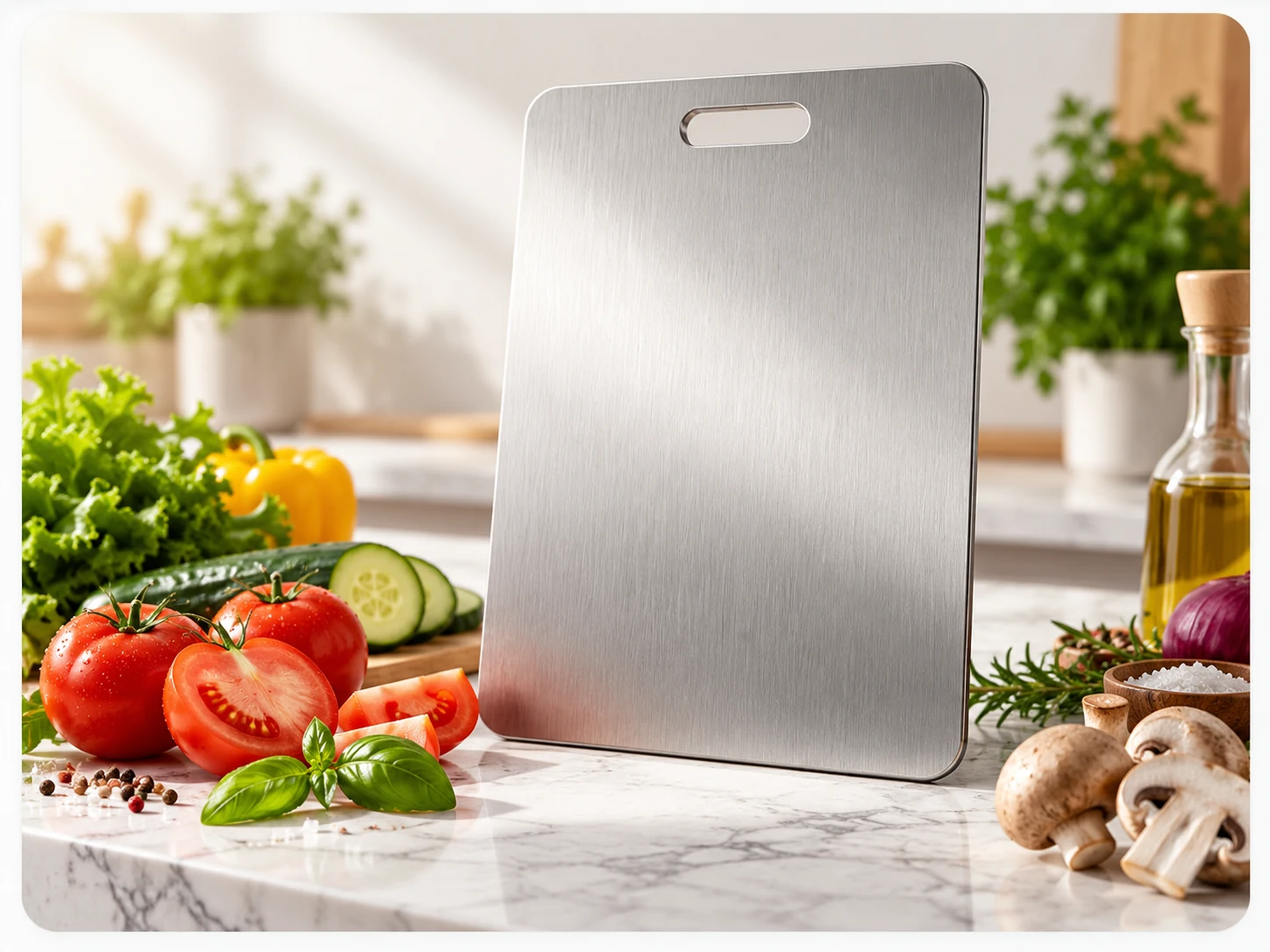
Titanium-style cutting board shown with fresh vegetables in a kitchen
01 / 03
A board that fits your routine Surface • handling • cleanup
01
Know the material Solid, coated or layered?
02
Check your workspace Dimensions and working area
03
Consider cutting feel Grip, sound and stability
04
Review checkout terms Package price and returns

What Should You Look for in a Titanium Chopping Board?

A well-chosen chopping board needs to work with your kitchen rather than simply match its appearance. Before comparing offers, consider how much space you have, what you normally prepare and whether the board's dimensions allow you to chop ingredients comfortably without constantly moving them out of the way.

Material and construction are equally important. A product advertised as titanium may have a different construction from another board using the same description. Look for clear material information, the board's thickness, its surface finish and any details about coatings or additional layers before deciding what you are buying.

Pay attention to the practical features that may be easy to miss in promotional photographs. A board needs to sit securely on your counter, have edges that are comfortable to handle and offer a suitable cutting surface. These details can have more influence on your daily experience than an impressive discount or premium-looking product box.

The most useful buying approach is to compare the specifications with your actual cooking habits. A board intended for occasional fruit preparation may not be the right size for extensive meal prep, while a large board could be unnecessarily difficult to store in a small kitchen.
PACKAGE OPTIONS

Compare the Current Board Packages

These figures are from the supplied package screenshot. Confirm the selected quantity, currency, shipping and final amount at the seller checkout.

1–4 board packages
shown
START HERE

Single board

1 × Titanium Chopping Board

$59.00 / board

Package total $59.00

One board for your kitchen

Buy 1 Board Today

Final terms and availability at checkout.

MORE FLEXIBILITY

Three-board set

3 × Titanium Chopping Board

$45.95 / board

Package total $137.85

Three boards in one package

Claim the 3-Board Value Pack

Final terms and availability at checkout.

LOWEST PRICE PER BOARD SHOWN

Four-board set

4 × Titanium Chopping Board

$35.90 / board

Package total $143.60

Four boards in one package

Unlock the Best 4-Board Deal

Final terms and availability at checkout.

The screenshot displays promotional pricing; it is not a guarantee of the live checkout price or shipping charge. Check the complete order total before payment.

What Does “Titanium” Actually Mean in a Product Listing?

Not every product advertised as a Titanium Chopping Board necessarily has the same construction. One seller may describe a board made from solid titanium, while another may sell a product with a titanium coating or a combination of different materials. These descriptions refer to different construction methods and should not be treated as interchangeable.

A solid-metal board and a coated board can have different characteristics relating to weight, surface wear, maintenance and long-term appearance. For a coated product, the underlying material and coating specifications are particularly relevant. Buyers should look for an explanation of what comes into contact with food and whether the product contains additional layers.

Terms such as “premium titanium,” “titanium technology” and “titanium finish” may sound impressive without clearly explaining the construction. If the listing does not state whether the board is solid, coated or layered, contact the seller before ordering. A trustworthy product description should make the actual material understandable without relying entirely on promotional language.

The same principle applies to claims about material purity. A statement that a board is made from pure titanium is a seller's specification unless supporting documentation is available. It should not automatically be interpreted as independent certification, proof of a particular titanium grade or confirmation of every advertised performance claim.

How to Verify the Material Before You Buy

The most useful product specification is one that tells you exactly what you will receive. Look for a clear material declaration, the construction type, dimensions, thickness, weight and care instructions. These details help you compare products on practical grounds rather than choosing based on photographs or headline discounts.

If a seller claims that its board is made from a particular titanium grade, look for documentation supporting that specification. A material certificate or independently verified testing report can provide greater clarity than a general statement about quality. Not every seller will publish these documents, but buyers can request them when material composition is important.

Food-contact suitability deserves separate consideration. In the United States, the FDA's food-contact framework covers substances used in food preparation surfaces and other equipment that comes into contact with food. However, the existence of that framework does not mean every product advertised as food-grade has received individual FDA approval.

For a board sold internationally, check which food-contact requirements apply in the destination market and what documentation the seller provides. Avoid treating a generic “FDA approved” badge as a substitute for a specific, verifiable statement about the product's actual materials and intended use.

Good product information should also identify any coatings, surface treatments or non-slip components. These details can affect cleaning and maintenance even when the main board is made from titanium. Before paying a premium price, make sure the listing provides enough information to understand what makes the particular product different.

Surface Finish: The Detail Product Photos Often Miss

Two chopping boards can be made from the same general material but feel noticeably different in use. Surface finishing plays an important role in that experience. A board may have a smooth appearance, a brushed finish or a more visibly textured surface, depending on its design and manufacturing process.

A smooth-looking surface may appeal to buyers who prefer a minimalist kitchen accessory. A brushed finish can create a different appearance and may make ordinary handling marks less visually noticeable. However, neither description automatically tells you how comfortable the board will feel under a knife or how it will perform after repeated use.

Product photographs are useful, but lighting can conceal small details. Highly reflective metal may appear exceptionally smooth in studio images, while ordinary kitchen lighting can reveal brushing patterns, surface marks or variations in finish. Look for close-up photographs taken from more than one angle and, where available, videos of the actual board being used.

The edges deserve just as much attention as the main cutting surface. A chopping board is repeatedly lifted, moved and washed, so its edge finishing affects everyday handling. Check whether the seller provides clear photographs of the corners and edges rather than showing only the board from directly above.

Surface uniformity is another useful quality indicator. Visible rough patches, unexpected raised areas or poorly finished edges should not be dismissed simply because a product is advertised as durable. If a newly delivered board appears inconsistent with its product description, document the condition and contact the seller before using it.

A good product demonstration should show ordinary preparation rather than relying only on a perfectly arranged display. Watching someone chop an ingredient on the board can reveal useful details about stability, cutting sound and handling that are difficult to judge from a static photograph.

Will It Actually Fit Your Kitchen Workspace?

A chopping board can have excellent specifications and still be inconvenient if it occupies too much space. Before ordering, measure the section of countertop where you normally prepare food. Consider the space available beside your sink, stove and ingredient containers, not just the total length of the worktop.

Think about the amount of food you usually prepare at one time. Someone who makes quick meals may be comfortable with a compact board, while someone preparing several family-sized dishes may need more working room. The board should leave space for ingredients that have already been chopped as well as those waiting to be prepared.

Storage is another detail worth checking. A thin board may fit inside a cupboard or beside other kitchen accessories, but its overall dimensions still matter. If you intend to store it vertically, measure the available height and make sure the storage position will not leave the board unstable.

When comparing dimensions, distinguish between the board's total size and its usable preparation area. Handles, raised borders or decorative features may reduce the space available for chopping. The product listing should make those features clear so that buyers do not discover the limitation only after delivery.

For a smaller kitchen, convenience may come from a board that is easy to move between the counter, sink and storage area. For frequent batch cooking, a larger uninterrupted surface may be more valuable. The right Titanium Chopping Board is the one that supports your actual cooking workload.

Stability, Weight and Handling: Three Things to Check

A secure working surface is one of the most important qualities of any chopping board. Before focusing on appearance or material, consider how the product is designed to sit on your counter. A board that moves unexpectedly during cutting can make food preparation uncomfortable and increase the risk of a knife slipping.

Weight can influence how a board feels, but heavier does not automatically mean better. A heavier board may feel substantial on the countertop while being less convenient to lift and wash. A lighter board may be easier to handle but could require additional attention to stability, depending on its design.

Look for information about non-slip feet, backing materials or other grip features where these are included. Do not assume every Titanium Chopping Board comes with a non-slip base. A clear product listing should identify the features supplied rather than leaving buyers to infer them from promotional photographs.

The board's shape also affects handling. Consider whether you can lift it comfortably when ingredients are on the surface and whether its edges provide a secure grip when carrying it to the sink. These details become more noticeable when the board is used several times throughout the day.

Before chopping, place the board on a clean, flat worktop and check that it remains stable under light pressure. If the manufacturer permits a suitable non-slip mat underneath, use one when necessary. Stability should be established before a knife is introduced into the preparation process.

The Cutting Experience: Feel, Sound and Control

The way a chopping board feels during use is a personal preference that product specifications cannot fully describe. A metal surface may produce a different sensation and sound from the board you currently own. That difference can become particularly noticeable during repetitive chopping or longer preparation sessions.

A useful product demonstration should show ordinary slicing and dicing rather than only the finished ingredients. Pay attention to how the knife meets the surface, whether the board moves and whether the user needs to apply unusual pressure. These observations can reveal more about everyday usability than a general “knife-friendly” claim.

The material alone does not establish how a particular board will affect knife edges. Blade steel, edge geometry, cutting technique and surface finish all influence wear. Claims that a specific product prevents dulling or keeps every knife sharp for longer should be supported by relevant testing rather than assumed from the word titanium.

Buyers who own specialised knives should consider the manufacturer's recommendations for suitable cutting surfaces. If knife preservation is especially important to you, ask the board seller for specific compatibility information and any comparative testing available for the exact model.

MATERIAL COMPARISON

Titanium Chopping Board vs Others

Compare construction, cleaning and cutting feel rather than assuming one material suits every kitchen.

What to check before buying
Board type Everyday characteristics What to consider
Titanium board (advertised) Metal-surface option; construction and finish can differ by seller. Confirm solid, coated or layered construction, edge finish and knife feel.
Wooden board Traditional cutting feel with many sizes and styles. Check material-specific care, drying and any conditioning instructions.
Plastic board Often lightweight and available in a wide range of prices. Inspect wear and deep grooves; replace when excessively worn.
Glass board Non-porous surface that is straightforward to wipe clean. Hard surface can be demanding on knife edges; check stability.
Stainless-steel board Another non-porous metal cutting-surface option. Cutting feel, sound, surface finish and grip vary by design.

Material descriptions are general. Check the exact product’s construction, care instructions and food-contact information before purchasing.

Match the Board to Your Preparation Workload

A Titanium Chopping Board should suit the tasks you perform most often. Start by thinking about a typical week rather than an occasional large dinner. The amount of chopping you do, the ingredients you handle and the space available beside your board all influence which design will feel practical.

For small preparation tasks, a compact board may provide enough room for herbs, fruit, garlic and individual vegetables. Its advantage is convenience: it can be taken out quickly, moved easily and stored without occupying a large section of the kitchen. The exact working area still needs to accommodate your knife safely.

One-pot meals often involve several ingredients prepared in sequence. In this situation, uninterrupted surface area can be valuable because it gives you space to organise ingredients before transferring them to the pan. A board that is too small may require frequent pauses to move prepared food into separate bowls.

Large-batch cooking creates different demands. Preparing ingredients for several meals may require substantial working space, comfortable handling and a board that remains stable over an extended period. Buyers who regularly cook in large quantities should pay particular attention to dimensions rather than assuming a compact design will meet every need.

For recipes involving both raw animal products and ready-to-eat ingredients, plan your food preparation workflow before starting. The FDA recommends keeping produce that will be eaten raw separate from raw meat, poultry and seafood, including the utensils and cutting surfaces used for those foods.

Handling Juicy Ingredients Without Creating a Mess

Tomatoes, citrus fruits, watermelon and other juicy ingredients can turn a simple preparation task into a countertop cleanup. When choosing a chopping board, consider how its shape handles liquids. Surface area, edge design and any drainage features can make a practical difference during food preparation.

Some boards include a juice groove or raised border, while others offer a completely flat working surface. Neither design is automatically appropriate for every task. A groove may help contain some liquid, but it can also reduce the uninterrupted cutting area and introduce another section that requires cleaning.

A flat Titanium Chopping Board may appeal to cooks who prefer a simple surface without additional channels or raised features. However, buyers should consider whether the design offers enough control when working with particularly juicy ingredients. Do not assume liquid will remain contained simply because the board has a metal surface.

Product photographs should clearly show the entire edge design. If a listing advertises a juice-catching feature, look for a close-up that demonstrates where the liquid is intended to collect. A feature should be visible and understandable rather than mentioned only in a headline.

From Chopping Board to Pan: The Ingredient Transfer Test

The preparation process does not end when the ingredients have been chopped. You still need to move them into a saucepan, mixing bowl, baking tray or storage container. A board's shape, weight and edge design can affect how convenient that transfer feels in an everyday kitchen.

Consider whether you can lift the board comfortably while holding prepared ingredients. A large board may provide generous chopping space but feel awkward when carried. A smaller board may be easier to move, although it might require several trips when preparing a substantial quantity of food.

The edge can matter as much as the size. Some designs make it easier to guide chopped ingredients into a container, while others are intended to remain on the worktop. Look for real-use photographs or demonstrations that show how the board is handled after chopping.

Do not use the sharp edge of your knife as a general-purpose scraper unless the knife manufacturer recommends that technique. A suitable bench scraper or another appropriate utensil may make ingredient transfer more convenient while avoiding unnecessary contact with the knife edge.

EVERYDAY KITCHEN HIGHLIGHTS

Three Practical Reasons Buyers Consider a Titanium Chopping Board

A simple at-a-glance section to help you weigh daily usability, cleanup and long-term convenience before you order.

01

Smooth Working Surface

A flat metal-style surface can make it easier to chop, gather ingredients and wipe the board down after everyday prep.

02

Simple Kitchen Cleanup

Many buyers like the idea of a non-porous board design that fits a quick rinse-and-wipe routine after cooking.

03

Modern Countertop Look

A Titanium Chopping Board often appeals to cooks who want a cleaner, more modern kitchen tool that still feels practical.

Your First Five Minutes After Unboxing

The first thing to do when your Titanium Chopping Board arrives is confirm that it matches the order. Check the model, dimensions, colour or finish, supplied accessories and any material information included in the packaging. Keep the order confirmation nearby so discrepancies are easy to identify.

Inspect the board under ordinary lighting before removing all packaging. Look at the corners, edges and main working surface for unexpected marks, deformation or delivery damage. The aim is not to expect a product that will never show normal wear, but to establish that it arrived in the advertised condition.

Next, place the empty board on a flat counter to check whether it sits properly. Examine any supplied grip features and confirm that the product can be handled comfortably. If something appears wrong, take clear photographs and contact the seller before preparing food on it.

Read the included care instructions rather than assuming the board can be cleaned in every possible way. Dishwasher suitability, approved cleaning products and heat limits should come from the instructions for the exact construction you received. A general claim about titanium does not establish the care requirements of every finished board.

The Seven-Day Kitchen Fit Test

Once you have confirmed that the product is suitable for use, evaluate it through ordinary cooking rather than a single demonstration. Over several days, pay attention to whether the board is comfortable to take out, place on the counter and use for the ingredients you prepare most frequently.

Notice how much working space is available during a normal meal. Is there enough room to separate prepared ingredients from those waiting to be chopped? Can you work comfortably without constantly repositioning the board? These observations will tell you more about the fit than the dimensions alone.

Cutting feel and stability are also worth considering. Observe whether the board stays in place and whether its surface suits your usual knives and technique. If you find yourself changing how you prepare food just to accommodate the board, its design may not match your preferences.

Finally, consider handling and storage. Is it comfortable to carry to the sink? Does it fit into its intended storage space? Are you satisfied with its appearance after ordinary use? This practical evaluation can help you decide whether the board genuinely improves your kitchen setup.

Check the seller's return terms before conducting an extended trial. Some policies restrict returns once a product has been used, so a seven-day evaluation should not be mistaken for a guaranteed risk-free return period.

Five Mistakes Buyers Make When Comparing Titanium Boards

Mistake 1: Choosing Only by the Headline Price

An attractive discount can distract from the actual product specification. Before comparing two offers, establish whether they refer to the same construction, dimensions and package contents. A cheaper board is not necessarily a better purchase if it lacks the features or material information you expected.

Mistake 2: Confusing a Titanium Coating With Solid Titanium

The word titanium can appear in several types of product descriptions. A coating, surface treatment and solid-metal construction are different. Buyers should identify which description applies to the specific board rather than assuming all products advertised under the same keyword contain an equivalent amount or type of titanium.

Mistake 3: Overlooking Dimensions and Thickness

Large promotional photographs can make a compact board appear more substantial than it is. Always check the numerical dimensions and thickness where available. Compare them with your existing board and kitchen workspace so that the actual product feels appropriate when it arrives.

Mistake 4: Assuming Every Metal Board Has the Same Care Requirements

A board may contain coatings, backing materials or attached accessories that affect its cleaning instructions. Do not assume dishwasher compatibility, tolerance for abrasive cleaners or suitability for hot cookware solely from its material name. Follow the guidance supplied for the complete finished product.

Mistake 5: Ignoring the Seller's Return Conditions

A discount is less attractive if the product does not suit your kitchen and the return conditions are unclear. Check who handles the order, when the return period begins, whether a used board qualifies and which shipping costs apply before completing payment.

How to Read a Titanium Chopping Board Product Page

A useful product page should answer practical questions without requiring buyers to search through repeated promotional claims. Start with the material description and construction details. If the headline promises pure titanium, look for supporting specifications rather than assuming the claim has been independently tested.

Next, find the dimensions, thickness, weight and available finishes. A product page that describes a board as lightweight or substantial without giving measurements may leave important questions unresolved. The specifications should allow you to compare the product with the board you already own.

Look closely at the product photography. Ideally, it should show the complete board, its edges, surface finish and actual use in a kitchen. Images that reveal the board from different angles are more informative than several versions of the same highly polished promotional image.

Customer feedback can provide another perspective, but its usefulness depends on the information provided. Reviews describing cutting experience, handling or months of ownership are more relevant to product quality than comments written immediately after placing an order. Look for clear indications of whether a purchase has been verified.

Finally, review the seller's contact information, delivery policy and refund conditions. Promotional terms should be consistent from the product page through checkout. If the guarantee description changes or the final amount differs from the advertised offer, resolve the discrepancy before paying.

Price vs Long-Term Value: What Are You Really Paying For?

The price of a Titanium Chopping Board should be considered alongside its construction, finishing, specifications and seller support. Two products may look nearly identical in photographs but differ in their disclosed materials, accessories or manufacturing details. The more expensive listing does not automatically establish better quality.

A useful comparison starts with the total delivered price. Include the product cost, shipping, taxes and any optional accessories. If the seller offers several sizes, calculate the cost of the version that actually meets your needs rather than comparing the lowest advertised prices for different products.

Consider the information available about long-term ownership. Does the seller provide realistic maintenance instructions? Is there a warranty covering specified manufacturing defects? Are replacement or return arrangements clearly explained? These details can be more valuable than an unsupported promise that a board will last forever.

Buyers should also distinguish a promotional discount from genuine savings. A crossed-out reference price tells you little unless there is a meaningful basis for comparison. Focus on the actual amount you will pay and the features you receive.

The Final Buying Decision: Which Features Matter Most to You?

By this stage, you should have a clearer idea of which Titanium Chopping Board specifications are relevant to your kitchen. The final decision becomes easier when you prioritise a few practical needs rather than trying to find a product that promises every possible benefit.

For a compact kitchen, available working area and storage may be the deciding factors. For someone who prepares large meals, the board's dimensions and handling could matter more. A frequent cook may place greater importance on stability and cutting feel during longer preparation sessions.

If material composition is your main concern, prioritise clear construction information and suitable food-contact documentation. If you are purchasing online for the first time, seller transparency and return conditions may deserve equal attention. Different buyers can reasonably reach different decisions using the same product information.

Your Priority What to Check Before Buying
Clear material information Solid, coated or layered construction
Comfortable food preparation Working area, stability and surface finish
Easy handling Weight, thickness and edge design
Kitchen storage Overall dimensions and available cupboard space
Product quality Close-up photographs and documented specifications
Purchase confidence Total price, seller details and return terms

A good buying decision is one where the product matches your expectations before it arrives. Confirm the details that matter most to you and choose a board that fits your actual cooking habits rather than relying on a general claim that one design is suitable for everyone.

QUESTIONS & ANSWERS

Titanium Chopping Board Frequently Asked Questions

Questions to ask before you choose a board and complete your order.

Is every Titanium Chopping Board made from solid titanium?

No. Product listings can describe solid titanium, titanium-coated surfaces or constructions involving multiple materials. These are not identical products. Check the complete material declaration rather than relying on the word titanium in the title. If the listing does not explain its construction, ask the seller for clarification before ordering.

What is the difference between titanium-coated and solid titanium construction?

A titanium-coated product uses a coating or surface treatment over another underlying material, while a solid titanium board is described as having titanium throughout its main construction. The exact properties depend on the materials and manufacturing method. Buyers should check the coating specification, substrate and care instructions rather than assuming the products are equivalent.

Does the thickness of a Titanium Chopping Board matter?

Thickness can influence how a board feels, handles and fits into storage, but it should be evaluated alongside dimensions, weight and construction. A thicker board is not automatically more suitable for every kitchen. Compare the published measurements with your needs, particularly if you regularly move the board between the countertop and sink.

Why do some metal chopping boards feel different during use?

Surface finish, thickness, construction, stability and the knives being used can all influence the cutting experience. A smooth metal surface may feel different from a textured or softer cutting surface. Product videos and detailed customer feedback can help, although trying the exact board is the most direct way to assess personal comfort.

What should I check when my board arrives?

Confirm that the dimensions, construction and included accessories match your order. Inspect the edges and surface for delivery damage, then check that the board sits flat on a stable countertop. Read the supplied care instructions before first use. If the product differs from its description, document the issue and contact the seller promptly.

Can a Titanium Chopping Board develop surface marks?

A metal board can show marks from handling, cleaning or repeated contact with utensils, depending on its finish and construction. Advertised scratch resistance should not be interpreted as a guarantee that the surface will remain completely unchanged. Check the seller's care guidance and any documented testing if appearance over time is important to you.

How can I confirm whether a titanium board is suitable for food contact?

Look for a clear material declaration and relevant documentation for the product's intended market. The FDA regulates substances used in food-contact applications, including food preparation surfaces, but a general “food-grade” claim is not the same as independent certification of a finished product. Ask the seller for specific documentation where needed.

What should I check before paying for a Titanium Chopping Board online?

Review the exact model, material, dimensions, quantity, full checkout price, shipping costs and seller identity. Read the warranty and return conditions, particularly whether a used board can be returned. Save your order confirmation and the applicable offer details so you have a clear record of what was purchased.

FINAL BUYER CHECK

Choose a Titanium Chopping Board That Works for Your Everyday Cooking

A Titanium Chopping Board should earn its place in your kitchen through practical performance rather than promotional language alone. The right construction, comfortable working area, secure handling and clear product specifications can make a greater difference to everyday use than an impressive list of unsupported claims.

Before ordering, compare the material description with the product you actually want, check the dimensions against your countertop and review the seller's care instructions. Make sure you understand the full price and return conditions so the purchase matches your expectations from the beginning.

Whether you are updating your kitchen equipment or exploring a different cutting surface for the first time, choose a board that suits the way you prepare food. A well-informed purchase is more likely to result in a kitchen tool you are comfortable using regularly.

Shop the Titanium Chopping Board Now
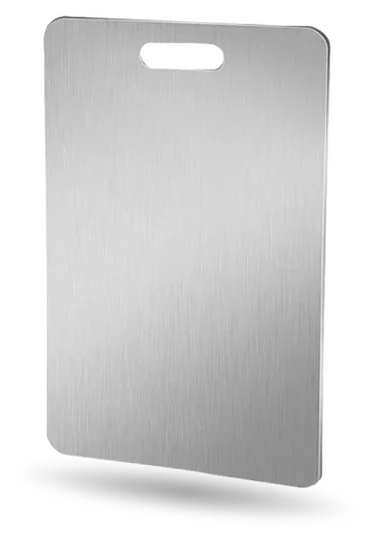
Titanium cutting board, front view
Titanium Chopping BoardCompare current packages See Today's Deal